
Explore Autumn Nighttime Critters at Rolling Ridge Conservancy on September 26

As summer transitions into autumn, the natural world begins to change, revealing a new array of wildlife and nocturnal creatures. Join the Rolling Ridge Conservancy on September 26 at 7:00 PM to find the critters and vegetation that come alive during dusk and nighttime in the beautiful landscapes of the Blue Ridge. Explore the fascinating behaviors and adaptations of various species as they prepare for the cooler months ahead. Participants will have the opportunity to learn about the unique wildlife that thrives in the autumn season, enhancing their appreciation for nature and its cycles.
Event Details
Join us on September 26th at 7 PM at Friends Wilderness Center, 305 Friends Way, Harpers Ferry, WV.
This event is preceded by the Friends Wilderness Center Full Moon Gathering Campfire and Potluck, which all are welcome to join. For more information about the Full Moon Gathering at 5 PM click here:
What to Expect
Recording flowers that bloom in autumn
Studying insects that are attracted to lights at dusk
Identifying bats and owls that come out at dusk
Why Participate?
Enhance your knowledge of local biodiversity
Engage in hands-on citizen science
Connect with fellow nature lovers
Don't miss this opportunity to explore the beauty of early autumn and nocturnal wildlife in the Blue Ridge area!
Spotting Autumn Animals and Plants at Dusk:
The event offers a chance to observe some of the region’s animals species active during an autumn evening. Species to watch for include:
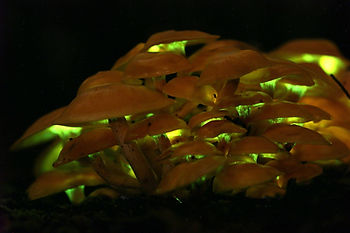
Jack-o'-Lantern Mushroom: A toxic, vibrant fungus found particularly under oak trees in late summer and fall. It has a bright orange to yellow-orange color, a funnel-shaped cap up to 10 cm wide, and decurrent gills that faintly glow in the dark. Its pumpkin-like look and bioluminescent gills have inspired Halloween folklore.
Eastern Red Bat: A reddish-brown bat, which migrates through the Northern Blue Ridge in early autumn, seeking warmer climates as temperatures drop. These nocturnal bats roost in tree foliage, blending in to evade predators. They use echolocation to navigate and find insects, their primary food source, which are plentiful in late summer and early fall. The Blue Ridge offers essential resources and resting spots crucial for their hibernation preparation.
Cyanide millipedes: Fascinating arthropods known for their unique chemical defense mechanism. These millipedes have the ability to produce cyanide when threatened, deterring potential predators with this potent toxin. Typically measuring between 1 to 4 inches in length, they exhibit a striking appearance with a segmented body covered in a hard exoskeleton. Their diet mainly consists of decaying plant material, playing a crucial role in the ecosystem as decomposers. Interestingly, the cyanide they produce is not harmful to humans in small amounts, but it serves as an effective deterrent against larger predators.

Lichens and Liverworts: Essential organisms in their respective ecosystems, showcasing unique adaptations and ecological roles. Lichens, as symbiotic associations between fungi and photosynthetic partners, thrive in a variety of habitats, exhibiting resilience in harsh environments. Liverworts are non-vascular plants found predominantly in moist areas and exhibit distinctive structures. They contribute to soil formation and moisture retention, providing crucial habitats for microorganisms and small invertebrates. Together, these organisms enhance biodiversity and ecosystem health.
Bride Underwing: A captivating moth recognized for its unique appearance, characterized by a dark forewing that elegantly contrasts with its bright orange hindwings, which become visible during flight or when the moth is startled. This species contributes to the ecosystem by serving as both a pollinator and a vital food source for various predators, highlighting its importance in maintaining ecological balance.
Using iNaturalist, participants can photograph and record these creatures, helping scientists track their populations and distribution.
What to Bring and How to Prepare
To make the most of the event, consider the following tips:
Wear comfortable walking shoes suitable for uneven terrain.
Consider insect repellant for protection from bugs like ticks.
Have a smartphone or camera ready for taking photos.
Dress in layers to adjust to changing weather conditions.
The event is suitable for all ages and experience levels, making it a great outing for families, students, and nature enthusiasts.
RSVP
All are welcome, and reservations are not required. However, it is always great to know you are coming, so please click the button below if you plan to join us:

Comments